
La Vida:
We’re talking with Nate Hausman, former director of Outdoor Education at La Vida, and George Abetti, founder and CEO of Geo Barns. My first question for you is what was the importance of this project for you?
Nate Hausman:
The barn is a particular building on the property that serves multiple purposes. It’s often the one at the end of our sessions and the trips where students would get to share about their experience, and that would often be done in a very community focused setting. And it was the time that they would think about their trip experience and they were on the verge of traveling back home, getting ready to leave that place, and it was the springboard in which they could then think about, how are we going to take the lessons that we’ve gained over the last week or two weeks and apply it into life. So the setting in which that happened, we’ve always found is really crucial to make it comfortable, make it feel like a safe place, but one that we liked the idea of the four walls and we’re all in there together experiencing that. We really loved the old barn and just the rustic nature of it.
So we wanted to make sure that we preserved that kind of rustic feel, and that’s what appealed to me about Geo Burn’s design is the aesthetics of it inside, it still felt very comfortable. You walk in, it’s a very warm setting. But practically though, it also if it’s raining out, it’s the place that they gather to pack up their stuff. During the winter, right now, it’s the place where all of our stuff gets stored, which serves many purposes, and it’s been a struggle the last couple of years to not have that space and we’ve really had to alter the way we do operations. We have made it work, but it’s been nice even as we were closing up camp a couple weeks ago to have the space available and put everything in there and know it’s protected from the weather for the next nine months.
I think buildings should be beautiful… when people walk into a building, their mouths should drop.
La Vida:
George, if I could have a little bit of your perspective from a contractor perspective, what the importance of this project was for you?
George Abetti:
I may kind of try, but I would say every part of every project is important, but I think there’s such a huge wide variety in our clientele. I mean, we’re building for multi-millionaires who want, you know, million dollar high-end wedding venues and churches, and you know, we build homes and art studios and car barns and so I mean, it’s just that there’s such an enormous variety because Geo Burns is sort of endlessly adaptable.
I think though with this project, and I might probably get emotional here, there’s the spiritual side. I mean, I’m a Christian, David is a Christian, you’re a Christian organization. So there’s already a pretty deep, deep connection between our two organizations even before we started. And the fact that La Vida extended such gracious hospitality to our crew, you know, and working out of schedule where we basically stayed there toward the end of your season.
You know, we’re not typical contractors. So I think there’s this sense of reverence for our clients, and then we add in a spiritual dimension. The crew attended some of those incredible sessions, and some of the meetings where people share testimonies and I do think Geo Burns from an aesthetic perspective are very cathedral-like. So, I mean, you walk in that building, I think it actually makes you want to worship because it’s so lofty, it just feels so beautiful and open. It’s all free span, so there’s no internal posts. And you’re a Christian organization and we see Geo Burns as a ministry. We really do. And as a ministry, I have hundreds of stories of clients’ lives being changed and we do say we’re not just really buildings, we’re building lives and I think that’s absolutely true. So La Vida was no exception to that, but probably just a little bit more because you were you’re overtly mission orientated and the purpose of your organization and therefore this building was part of serving that greater purpose, you know, to glorify God and to enable others to know him and to become closer to him. So, what a privilege.
Nate Hausman:
And again, George mentions this idea that they appear to be a bit different. For me, I’ve certainly dealt with my fair share of contractors and I put so much importance on the level of trust that I get and that’s something that right from my I can still picture the initial phone call that I had. I was pushing a stroller and walking through our old hometown, giving George a call, and at the end of that call, I could tell, I can trust him and they’re going to do a good job with the work. And that to me, I just put a lot of weight into that, because it did feel like a vulnerable place that we were raising all the funds for this and we were entrusting them to build what our dreams were, and we knew that there was a high level of trust needed there, but he earned that very quickly. And it really was a development of a friendship and then I have George come visit and see the property ahead of time. They represent us so well.
La Vida:
My second question is, could you describe the unique construction techniques that were used? So specifically the techniques of eliminating cross beams for strength and openness or the zero waste, achieving zero waste through reusing every cut of wood, that kind of stuff.
George Abetti:
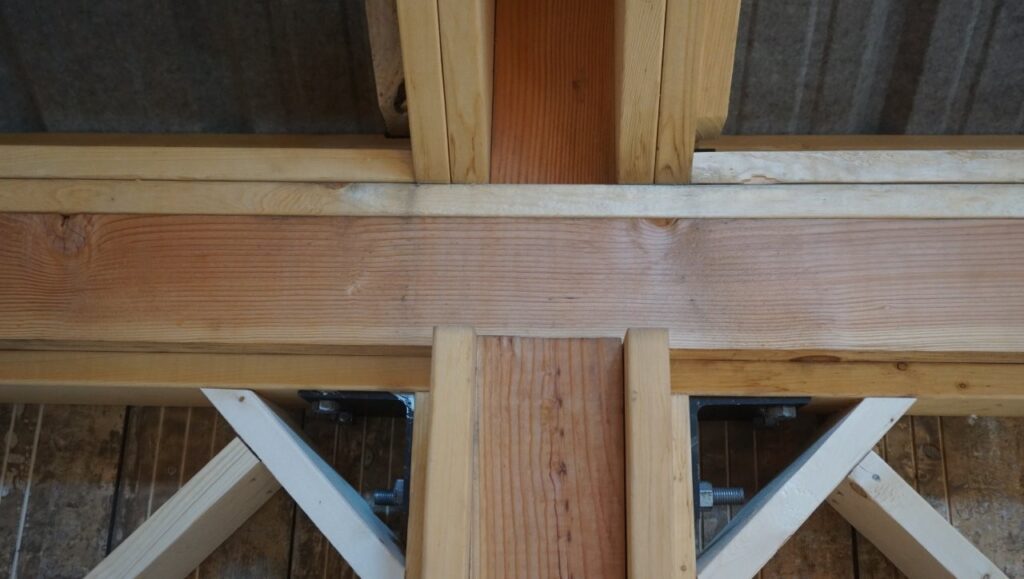
So Geo barns are designed to be maximally efficient and versatile. And so, basically, the clients can divide up the spaces as they see fit, for a bathroom or a bedroom in a house, obviously you want privacy in those rooms, but it’s really to divide, to divide the spaces, but having the building be free span, for instance, in your building, you know, allows a large group of people to meet without blocking up a play or a go-round or store materials or to swing canoes around or a host questing to the ceiling without banging into stuff, which is really very, very useful.So that’s one thing: the free span structures.
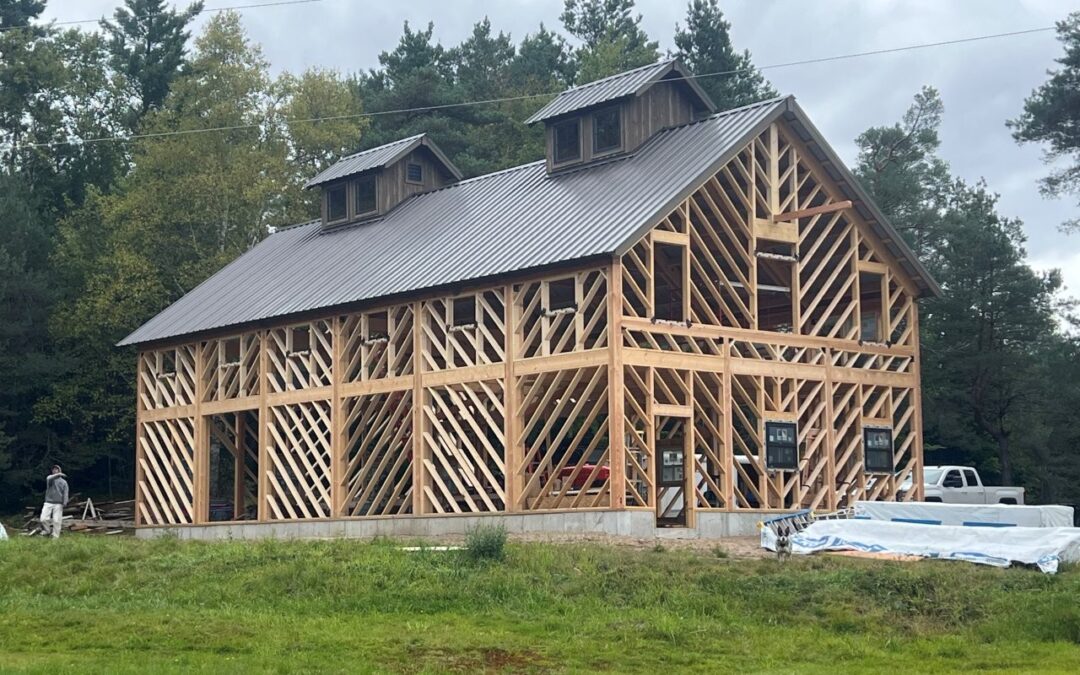
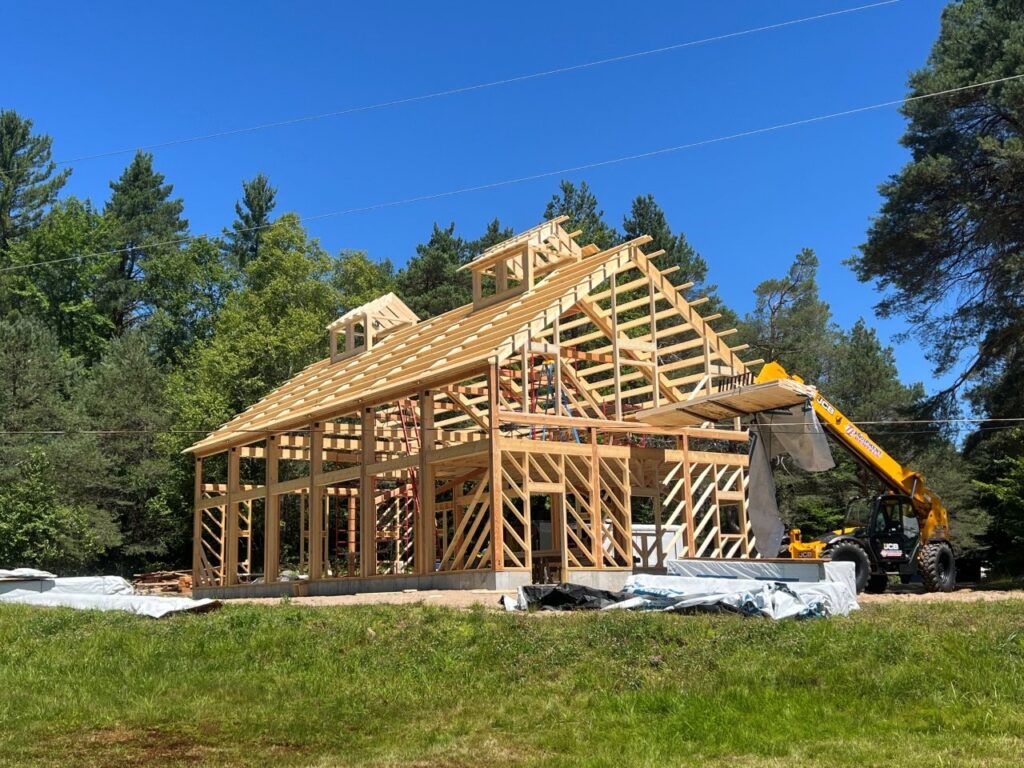
The second is the diagonal framing includes the need for plywood, if you’ve driven over bridges, which I’m sure you have, you know, the steel trusses are usually all triangles. So God visited me during what I referred to as the walk, my walk to the edge of hell and back, in the 90s when my life is, I knew it was over and I had to basically reinvent myself and I started building again and he just gave me this vision as I was just desperately seeking him to get a job and get into the budget and I figured out that if I went to diagonal framing, I could completely eliminate wrapping the building in plywood, which is a huge carbon footprint and very expensive and a lot of labor. This is what Geo Barns is about. I mean it’s just a gift.
And so we get to have this gift which we keep giving over and over again to all our clients and that’s really the basis for how we operate and the zero waste is partial, because of the diagonal framing that we can, the boards are all different sizes.
So I have all these numbers in my head, but they just work out so beautifully, but it’s also a spiritual issue because God has given us all these wonderful materials from his creation and I don’t want to abuse, disrespect or have ingratitude for all he’s given us. And I’m going to say, just as importantly, clients like yourselves who are raising for you a huge amount of money from people who are giving you money. I mean, you’re not earning it. You are providing a ministry, but I mean, you’re not manufacturing widgets and selling a million of them and then cash in. And so that’s a sacred trust, when a client gives us 400,000 or 3 or $4 million, whatever the number is, to build something their heart has longed for. We don’t have the option to screw that up.
And so what I want to communicate is how grateful I am that you entrust us with your hard earned money or the money that you’ve raised and I don’t want to set out a dumpster once a month with your money in it. That’s the only real simple. So it communicates gratitude and respect and stewardship and appreciation for God’s creation.
Nate Hausman:
And that zero waste thing really spoke to me of just being stewards of the environment. Something that lines up really well with the philosophies of the program of very similar to what George is saying taking care of what we’ve been given, and driven by so many construction sites and seeing those dumpsters of perfectly good lumber and just to think about the mountain of garbage that will be created and to be covered up with dirt, does not feel like it’s setting up my kids well, as they inherit the earth. It’s not just about saving money, but it’s trying to get the full picture of being good caretakers of what’s been provided to us.
George Abetti:
You know, there’s always going to be some waste and I’ve been this is kind of funny. I’ve actually had clients complain about it and said that I thought they’d have a lot more leftover wood for the fireplace. I just said, well, just throw some dollar bills in there, they’ll burn great.
Nate Hausman:
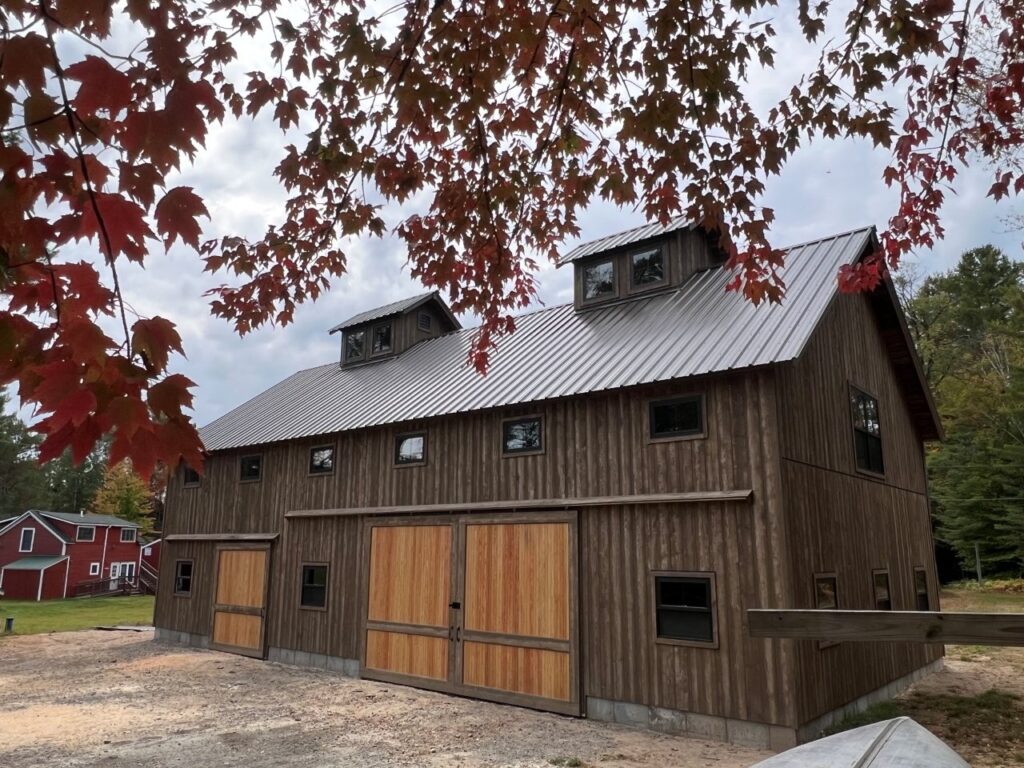
I think what I also really like and, you know, I was maybe one of the clients who I just ask a lot of the nitty gritty questions down to like looking at a door and saying, “where did you buy this wood?” What is this wood? Because I could tell that the quality of, I could pick up a board and I thought this board is straight, there’s no curve to it, it was milled really well and that was something that I knew with George that they were going to provide quality materials.
You know, one thing that I noticed, I feel like I go into buildings and you see a nail gun and they’ve missed the stud and there’s this nail that’s shot through. And I started to look around and I thought, there is not a single miss shot nail in this entire building. And that, not everybody would recognize that, but I saw that and I thought, that is that attention, that care that is so minute, but really shows that in the big picture, they think about everything.
George Abetti:
I mean, that for me, is the integrity of saying you’re going to provide a great service, a great product.
Nate Hausman:
Yeah, George sent me a lot of material. He spent a lot of time writing up “here’s who we are, here’s what we do and here’s why we do it.” And I remember getting these emails very early on in the process, kind of showing me what Geo Barns does in the product they provide. I read all that stuff and then I remember thinking, George is setting the bar high for himself here. But he and they delivered.
La Vida:
So what are the techniques that were used specifically for building the barn, important for the La Vida Barn and the mission that it’s serving?
Nate Hausman:
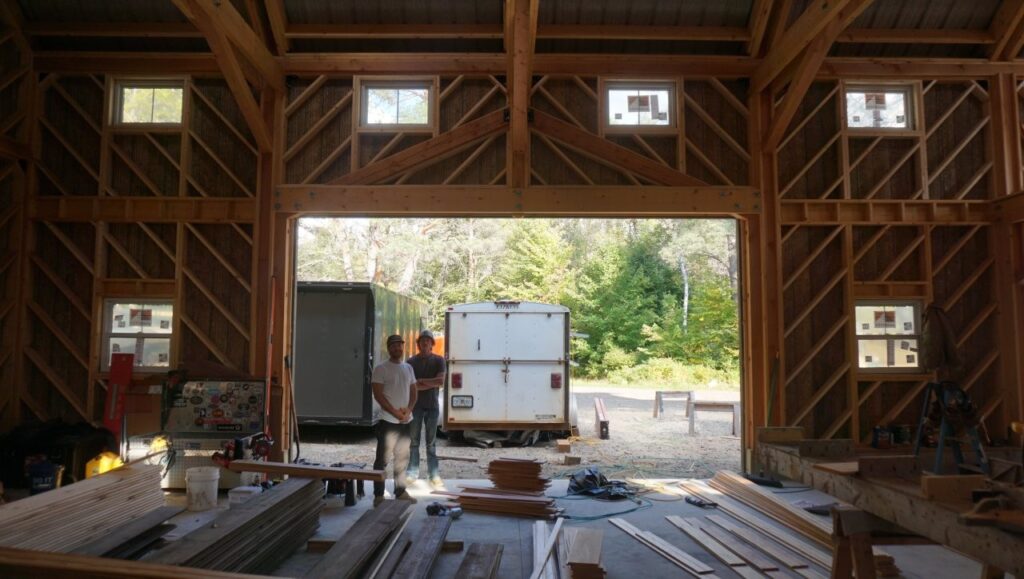
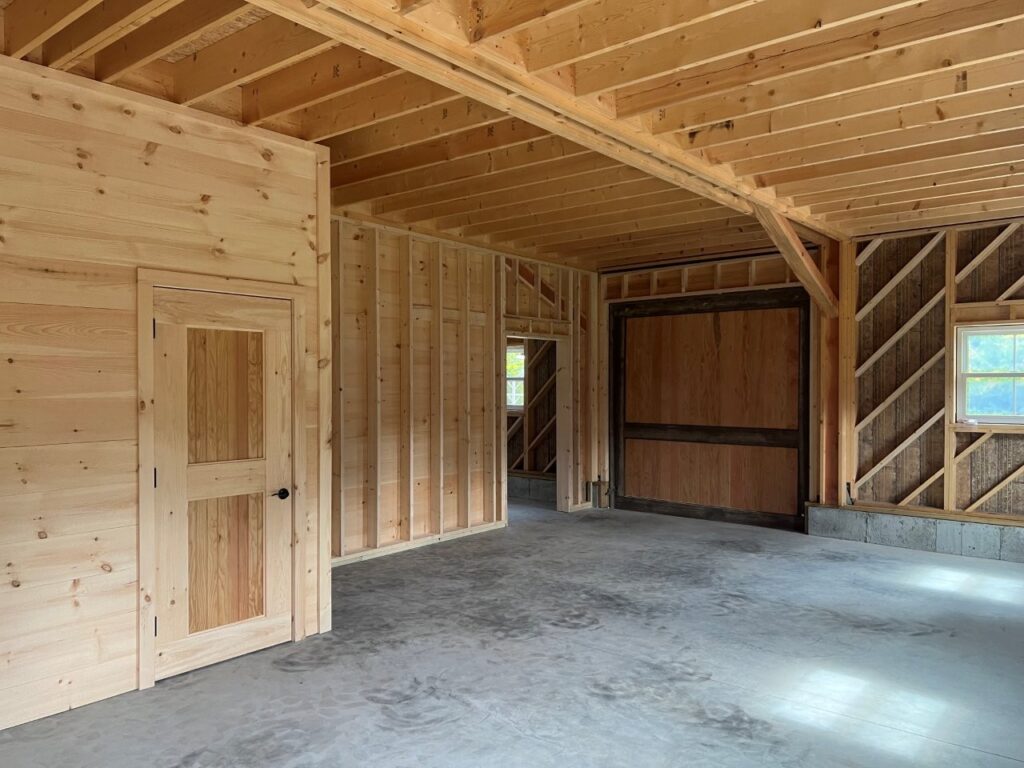
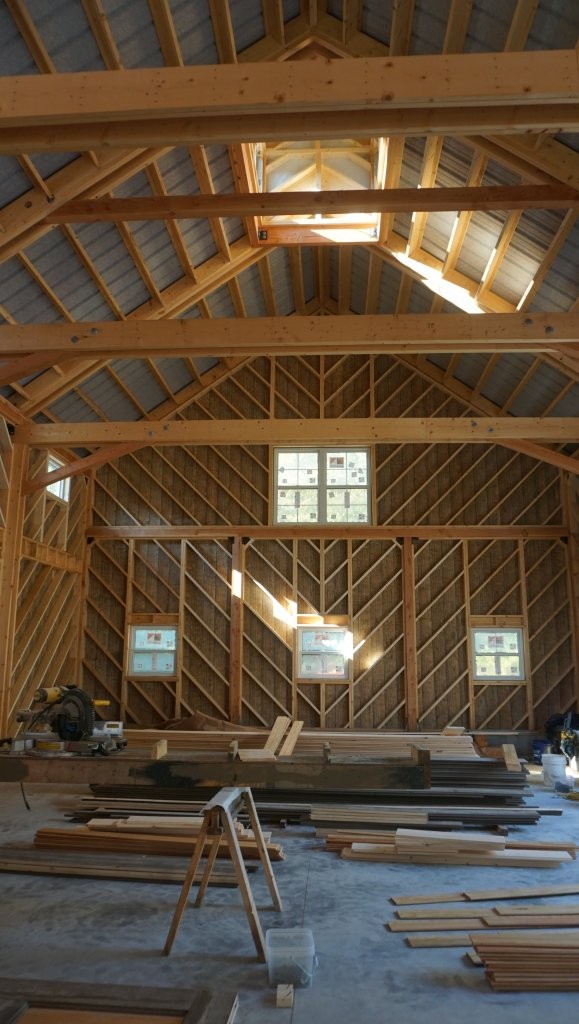
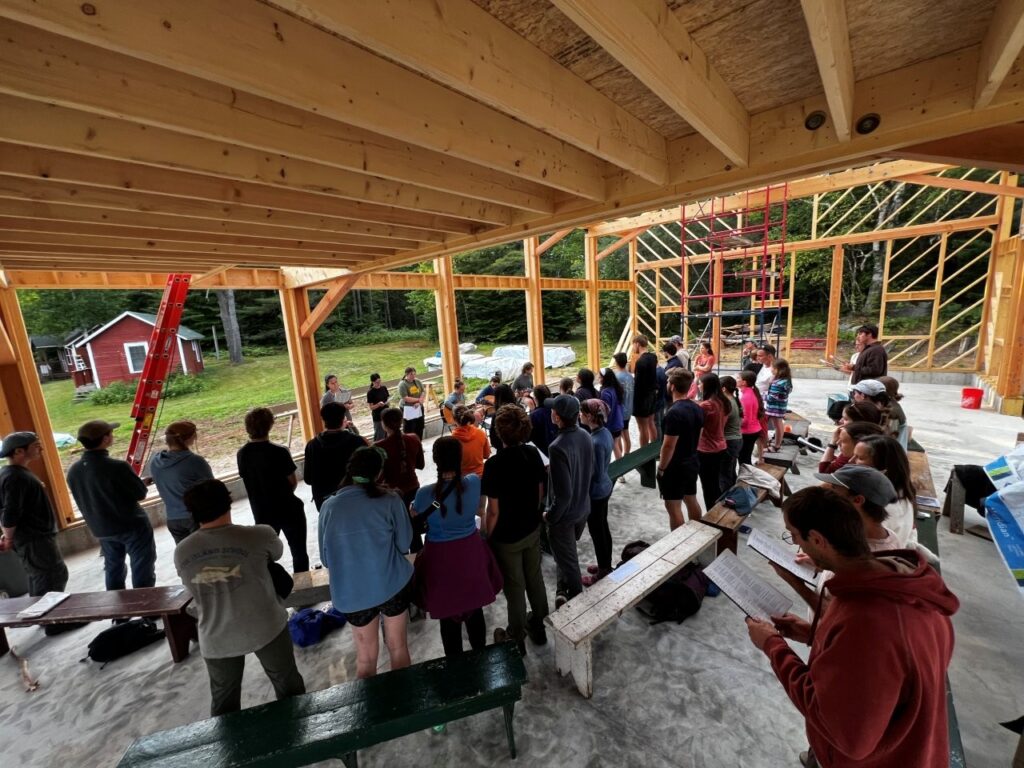
I feel like I would reemphasize just again, material choice and material usage. I feel like we’ve touched upon that and that again was something that appealed to me. The design, as George has mentioned, the kind of open frame and free span, just lots of ability to use that space, multipurpose, was really important so that we could get a lot of people in there, but that we could then very easily get trailers of canoes in there. We also wanted to make sure that there was a lot of natural light. That’s I think another thing that has really stunned me is, even without artificial lighting installed, it is still so bright there. And that is something I just remember. The old barn was always very dark. It was so dungeon-like. And I’ve been shocked at how well this one is lit, and I really like that, and it feels airy in a sense that, I think during the summer months, it’s going to be a very comfortable space to be.
And then again, I think I mentioned that we just wanted a barn. The barn that was there was over 100 years old, and there was a bittersweet element taking it down because that it had heard a lot of great stories and had survived many, many years, but it was great to think about reconstructing something that could be there for another hundred plus years and to not question that. Even just I mean, another thing that is just a small, but it’s huge, the old floor was all cracked and unlevel, and people would trip over it. So just to have a nice, flat floor. I was walking around and I was like, this feels so nice to not be navigating the various crevasses of the old floor, it was quite a pleasant experience.
George Abetti:
The only thing I would add is that, I mean, our buildings are really beautiful. They are gorgeous and I think that the difference between beauty and ugly has nothing to do with money. It’s just about thought. And I think buildings should be beautiful. I think when people walk into a building and a Christian camp, their mouths should drop. And their head should snap up and just go, “wow, what a fantastic place,” and I think that enhances the sharing. People’s hearts are a little fuller. When you’re in a beautiful space and you’re working in a beautiful space or being in a beautiful space, it does bring you closer to God. I mean, you look at all the cathedrals and the architecture in the Renaissance and medieval times, the churches, so many magnificent churches were built, and there’s this longing to express our gratitude to God for just how wonderful he is. And I think a building in its own way can and should do that. I think that’s important.
And you probably could have gotten an extremely utilitarian barn for a little less money, but I think what you would have given up is irreplaceable. It’s just the value of that is incalculable, it’s not something you could put a quantitative, the difference between beauty and ugly is not very many dollars, it’s all about thought and design and designing for who and what’s in the building, and what are they doing when they’re in there.
La Vida:
And then my last question is, now that the barn is finished, what are your final thoughts on it and how is this new barn going to continue to support La Vida and it’s mission?
George Abetti:
We love the fact that the building will represent you well, but it’s also going to represent us well, and so we believe we serve you ultimately that that comes full circle. I mean, I don’t see how it came about, but the board member who suggested it to us is a close friend, and I built her art studio in Virginia. The word just spreads when you build something that people love. Other people see it or they tell people about it, and then he knows about us and that we build an incredibly good product for a good price. Not cheap, but certainly not expensive compared to what you could have spent. So, this is just the way God works. It’s sowing the seeds; you sow some seeds and pretty soon you’ve got a forest growing, it’s I mean it’s humbling.
Nate Hausman:
I mean, this for me, I think, I don’t work for the program anymore, so now that it is done, it feels like it’s an honor to have been able to see the final stages. It was a privilege to get to meet George’s crew and interact with them. I got to go up there a little bit in the summer and meet them and shake their hands and get up in the building with them and ask questions and I ask, how do you, what are the measurements? How do you do this? And they very graciously took the time to entertain me. But it feels like a big accomplishment just because it’s been something we’ve been thinking about now for years. So to finish the project, it feels like a monumental finish line, and that is a good feeling.
I think it’s also because I’ve got a number of pictures on my phone and it’s been a fun way to, I’m a huge Geo barn advocate and any opportunity I get to spread the word now, I’ve been trying to become a bit of a salesman for him. So, I love showing the pictures and everyone I open up to this one, that’s if it’s a great back lit shot and they’re like, “wow, those doors”. And I was like, “I know, they are beautiful.” So, I think, George also knows that as you come up our driveway and you make a corner, the very first building you see is this, and as he was just mentioning, that is now, I feel like, the welcome spot, and I think it’s really going to speak a lot to anyone who comes on, be it the guy who’s coming to empty our recycling bin or the UPS driver.
I am positive as they go up that driveway, they are going to continually get comments about, “wow, that is a beautiful building”. And I think now it’s an opportunity to bring people in and say, this is how it’s going to get used. This is what we’re going to do with it and that’s just an opportunity to continue to spread the good news about the program and all that we do and why we do it. So, it will certainly be a tool for many years to come to keep spreading that good news.